
Why do cetaceans strand?
Cetaceans strand for a variety of reasons, but they always require medical evaluation before being refloated into their natural habitat.
ZSL-CSIP.jpg)
Stranding conserves energy.
Dolphins are marine mammals, so they actually breathe air. When they are weak or disoriented they may swim into shallow waters- this allows them to breathe without expending energy needed to swim.
However, this leaves them susceptible to sunburn, and injury from the pressure of their body weight on their lungs and organs.
Causes include...
- Disorientation (large storms & tides)
- Injury (from boats or predators)
- Entanglement in fishing gear
- Sickness (respiratory illness, viruses)
- Hearing or Vision loss
- Social Bonds (mother and calf pairs)
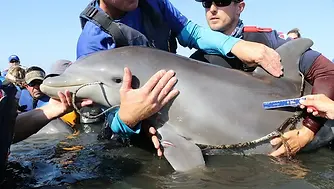


What Happens When an Animal Strands?
When a live animal strands, emergency teams kick into action.
Code 1- Live Animal
A live animal stranding will be responded to by the nearest certified rescue and government agencies. These emergencies require vet and rescue staff to evaluate and determine the next steps to take.
After careful evaluation, animals deemed healthy enough can be refloated and monitored, to ensure they make it away from the location safely.
Sick, wounded, or very young animals are typically taken in to the closest marine mammal facility with space available for further medical care and rehabilitation. It is then up to NOAA and the NMFS to determine if the animal is a candidate for release.
Code 2- Recently Deceased
Code 3- Moderate Decomposition
Code 4- Advanced Decomposition
Code 5- Mummified
When an animal has already passed away, responders will still collect the remains and analyze them. In most cases a necropsy, or nonhuman autopsy, will be performed to confirm cause of death and learn more about the history of the individual.
Although the animal has already passed away, the information gained from its remains can provide valuable information about the species as a whole.

Non-Releasable Animals
Some individuals cannot be released, due to their lack of survival skills, disabilities, or habituation to humans. Once deemed non-releasable, NOAA accepts applications from facilities willing to give the animal a permanent home. Ultimately, the government is in charge of choosing the facility best suited to provide long-term care for the individual. Placement depends on the animal's age, sex, health status, and how they will integrate into the existing social structures of the applying facilities. Many non-releasable animals become ambassadors, educating people about their species and how we can protect our ocean ecosystems.

SeaWorld Successfully Rescues and Releases a Dolphin trapped in a Mudflat


How can we prevent strandings?
Root causes of cetacean strandings include human impacts,
such as...
- Boat strikes
- Entanglement in fishing gear
- Hearing loss from noise pollution
- Changing water conditions due to climate change
- Sickness due to toxic algal blooms
Recent examples of human imapcts on cetaceans include...
- Piney Point disaster and Red Tide events
- 2010 BP oil spill
- Increased ingestion of trash and plastic products
- Manatee cold stuns due to development of warm water springs
- 1989 Exxon Valdez oil spill
People can make efforts to make individual changes and hold corporations accountable
- Advocate and vote for renewable and sustainable energy sources
- Practice safe boating and fishing practices
- Support government protections like the MMPA
- Reduce personal plastic waste and advocate for sustainable alternatives on corporate levels
- Participate in peaceful protests and advocacy efforts
- Support researchers and rehabbers working to understand and protect local populations
